Former Nigerian Nutritionist Documents the 7 Plants His Father Used to Reverse Pre-Diabetes at 58 and Why Your Doctor Has Never Once Mentioned Any of Them
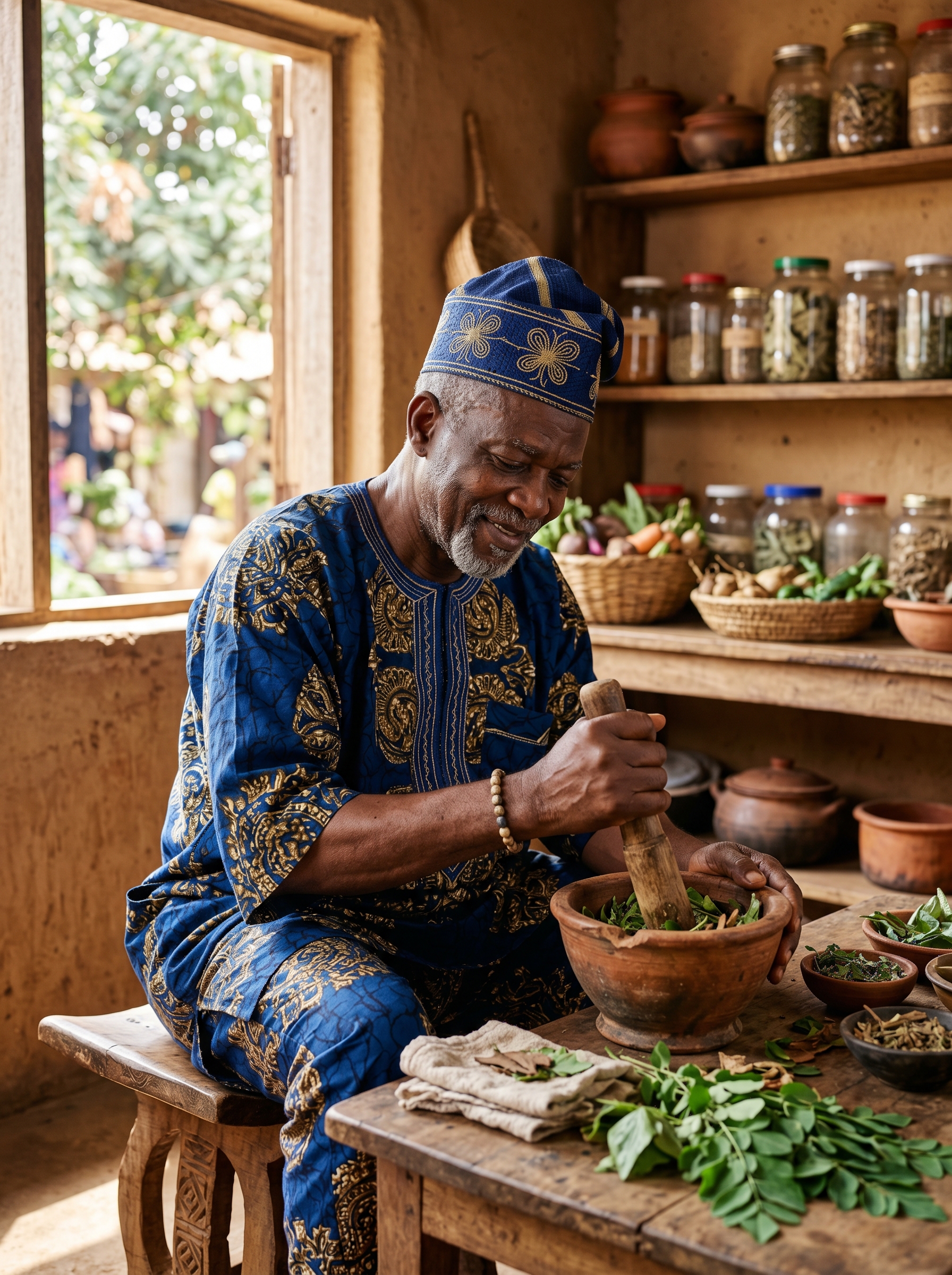
Papa Chukwu at his home in Enugu. He spent 22 years as a clinical nutritionist before documenting his family's traditional approach to blood sugar management.
You know that feeling when the doctor finishes talking and you realise you stopped hearing him five minutes ago? He was still moving his lips. Something about HbA1c levels. Something about kidneys. Something about the word you did not want to hear.
You sat in that chair and smiled and nodded. Because that is what Nigerian men do. We do not show panic in front of a doctor.
But inside, your whole world shifted. You drove home in silence. Your wife put a plate in front of you — eba and egusi, the same soup she has been making for twenty years — and you stared at it like it had become your enemy.
Maybe you already tried to change. You cut sugar for two weeks. You bought the hospital diet sheet — brown rice, grilled chicken, cucumber salad. You lasted four days.
This is not my food. Nobody in my family has ever eaten like this.
You tried the bitter leaf water. You tried the herbal mixture from the Instagram page. You reduced the eba portion. You started walking in the mornings. And still — every morning — the number sat there on the glucometer screen, stubborn as a tenant who has refused three eviction notices.
Here is what nobody told you: the advice you were given was not designed for your body, your food, or your life. It was designed for someone else entirely. And that is exactly why it has not worked.
What follows is what a Nigerian nutritionist, after 22 years of clinical work, finally sat down and documented — the seven plants his own father used, why they work, and exactly how to build them into a Nigerian man's daily life without giving up a single thing that makes eating worth doing.
Why Your Numbers Are Not Moving
There are three specific biological mechanisms driving your high blood sugar. Your doctor has managed them with medication. But unless you understand what is actually happening inside your body, the medication will always be fighting a battle with one hand tied behind its back.
Root Cause 1 — The Carbohydrate Shift: Your grandfather ate yam, unripe plantain, and fermented cassava processed in ways that slowed digestion. You eat white rice, instant pounded yam powder, and heavily processed garri. When food is refined — the fibre stripped, the starch broken down — your digestive system converts it to glucose very rapidly. Over years, your insulin system becomes overwhelmed. The cells that should respond to insulin start ignoring it. This is insulin resistance. It is the root of Type 2 diabetes.
Root Cause 2 — Inflammation from the Wrong Oils: Your grandmother cooked with red, unprocessed palm oil — rich in tocotrienols and compounds that reduce inflammation. Then vegetable oil arrived. Refined seed oils, at high cooking temperatures, promote chronic low-grade inflammation. Chronic inflammation is one of the primary mechanisms through which insulin resistance develops and worsens.
Root Cause 3 — A Liver Working Against You: Most people think blood sugar is only a problem after eating. It is not. Your fasting reading — the number you take in the morning before eating — is controlled primarily by your liver. Overnight, your liver releases stored glucose. A stressed liver releases too much. This is why your morning numbers are often your worst of the day. You have not eaten anything. You have been fasting for eight hours. And the number is still 8, 9, 10 mmol/L.
The bitter leaf, moringa, and scent leaf at the centre of this protocol have demonstrated specific liver-protective and anti-inflammatory properties that directly support better overnight glucose regulation. Your grandfather used all three. He did not know the clinical terminology. He just knew they worked.
You Have Already Tried Everything. Here Is Why None of It Worked.
This is not about discipline. Every single thing on this list below has a specific reason it was never going to be enough on its own.
- Pharmacy medications You take them. They help. But the moment something disrupts your routine — a wedding, a funeral, a stressful work week — the number climbs back. Because the medication manages the symptom. It does not address the root cause of why your liver is producing too much glucose overnight.
- The hospital diet sheet Brown rice and grilled chicken for a man who has eaten pounded yam since childhood. It is not sustainable. It was not designed for your life. And a diet you cannot sustain for life will never produce results that last a lifetime.
- Instagram herbal mixtures Unmarked bottles. No dosage. No preparation method. No science behind what is inside. You paid good money for products you cannot even verify. Some of them may contain real herbs. But without the correct preparation and combination, you are simply drinking expensive water.
- Cutting out all carbohydrates Three weeks of suffering, missing food at family tables, explaining yourself at every gathering. Then one Sunday at your brother's naming ceremony, you eat normally — and by Monday morning, your reading is higher than it was before you started. The extreme approach was never going to work long-term.
- Advice from well-meaning relatives "Drink this every morning." "Stop eating after 6pm." "My uncle tried this and it worked." Different advice from different people, all contradicting each other, none of it grounded in your specific biological situation.
- Walking and light exercise alone Exercise helps. But if you walk for 30 minutes in the morning and then eat a large meal of white rice and stew without sequencing it correctly, the walk has done very little to counter the blood sugar spike that follows. Exercise without dietary and herbal support is incomplete.
"None of these worked because none of them addressed the ROOT of the problem — which is insulin resistance driven by three specific biological mechanisms your doctor has never once explained to you."
What Our Grandfathers Knew That Modern Medicine Forgot
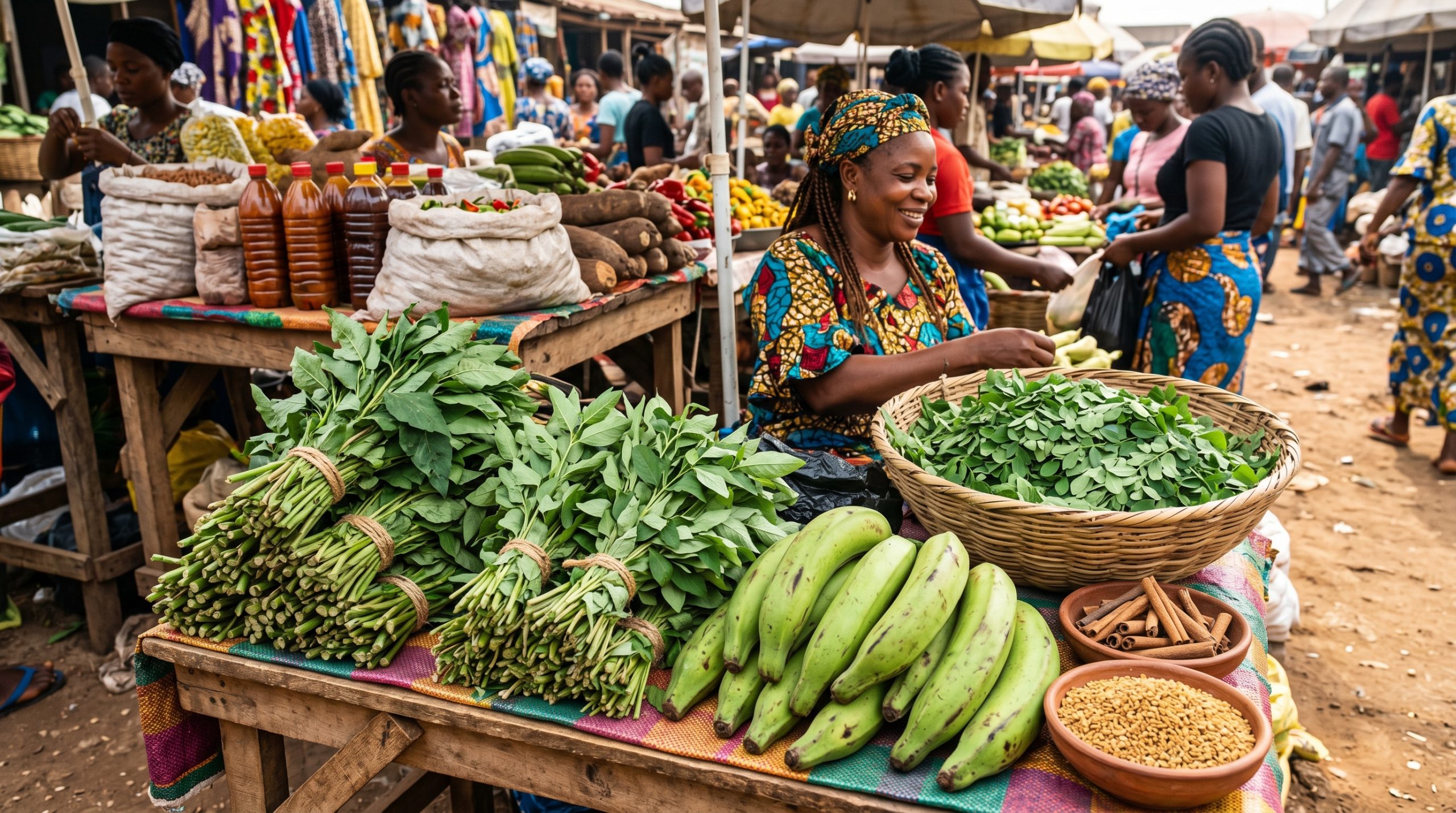
Our grandfathers did not have pharmacies. They did not have Google. They did not have Instagram herbalists selling mixtures in unmarked bottles. And yet — in your grandfather's generation, men ate yam, eba, and palm oil their whole lives and died of old age, not of complications from blood sugar.
"Your eba is not the problem. The problem is that nobody ever taught you how to eat it properly as a diabetic. The glycaemic impact of Nigerian food is not fixed. It changes completely depending on how you prepare it, what you eat it with, and the order in which you eat different things on your plate."
What changed was the food itself. Your grandfather ate yam — whole, boiled, naturally processed. You eat instant pounded yam powder. Your grandmother cooked with red palm oil. You were told vegetable oil was healthier. The fermented locust bean (iru/dawadawa) that made your grandmother's soups taste like medicine — that is not a coincidence. It was medicine.
Modern nutritional science is now catching up to what those kitchens already understood. Seven specific Nigerian and African plants — ingredients already sitting in your market and probably in your kitchen right now — have documented, peer-reviewed, published evidence for blood sugar reduction. Your grandfather used all seven without knowing a single clinical term.
Papa Chukwu's 7-Herb Diabetes Reversal System writes down what the kitchen already knew, adds the science that confirms why it works, and builds it into a 90-day protocol that a Nigerian man can follow without abandoning his food, his culture, or his life.
Bros I have to share this. Started the morning tonic on a Thursday. The following Tuesday my fasting reading was 6.8 — down from 9.1 where it had been sitting for three months. I did not change my medication. I did not stop eating eba. I just followed the protocol exactly. My wife has started making the bitter leaf soup three times a week now. This thing works. Tell every man you know who is managing this thing.
Your Ancestral Arsenal — 7 Herbs Already in Your Market
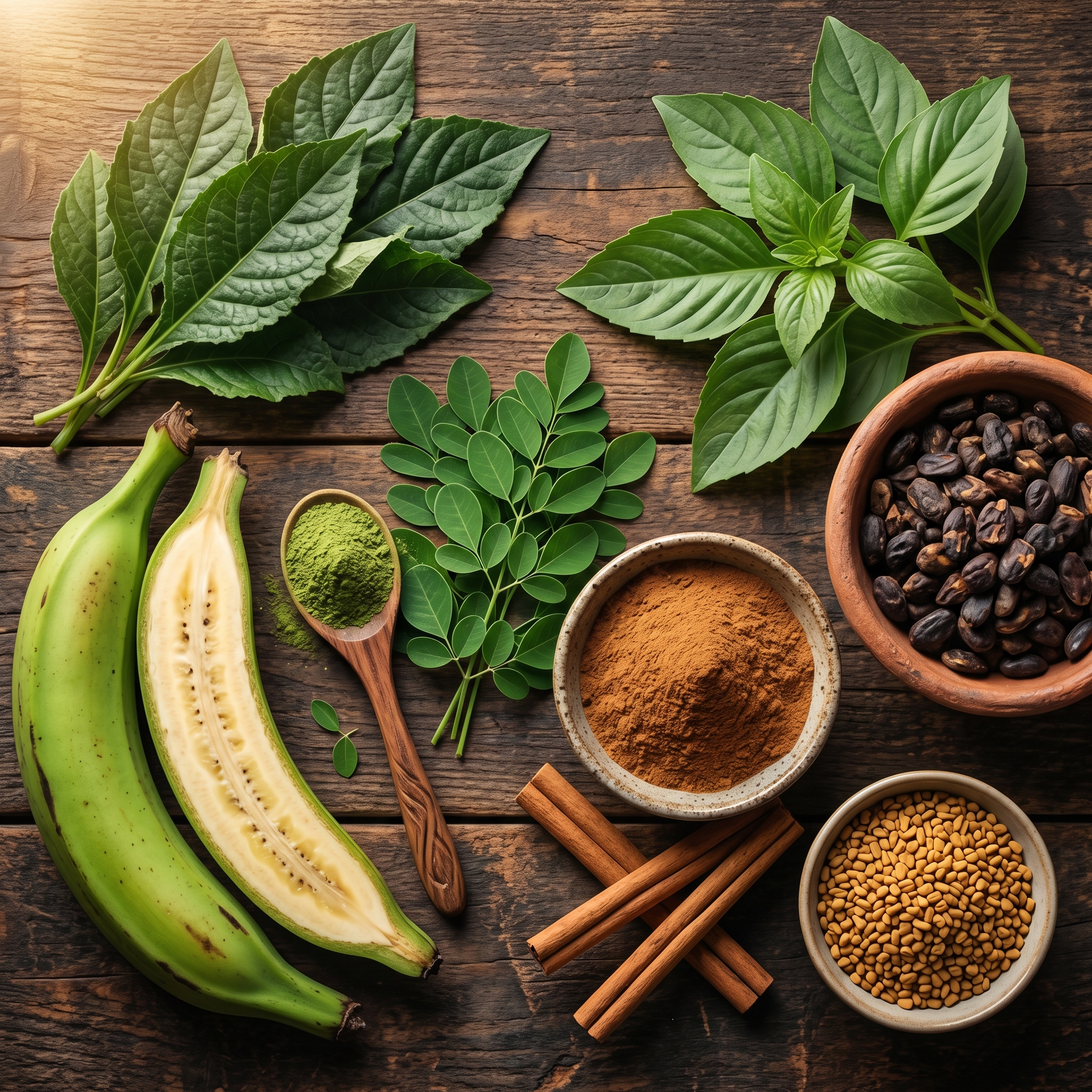
Each of these ingredients has peer-reviewed, published research confirming its blood sugar impact. Each one is available in Nigerian markets and African stores worldwide. Your grandfather used all seven.
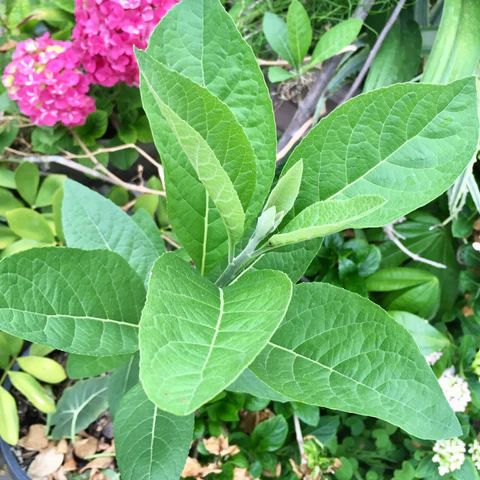
Bitter Leaf (Vernonia amygdalina)
Onugbu (Igbo) · Ewuro (Yoruba) · Shiwaka (Hausa)
The dark green leaf in your ofe onugbu soup. Contains flavonoids that inhibit the enzyme that converts starch into glucose in your gut — slowing the flood of sugar into your bloodstream. Also protects your liver from the oxidative stress that drives high fasting readings.
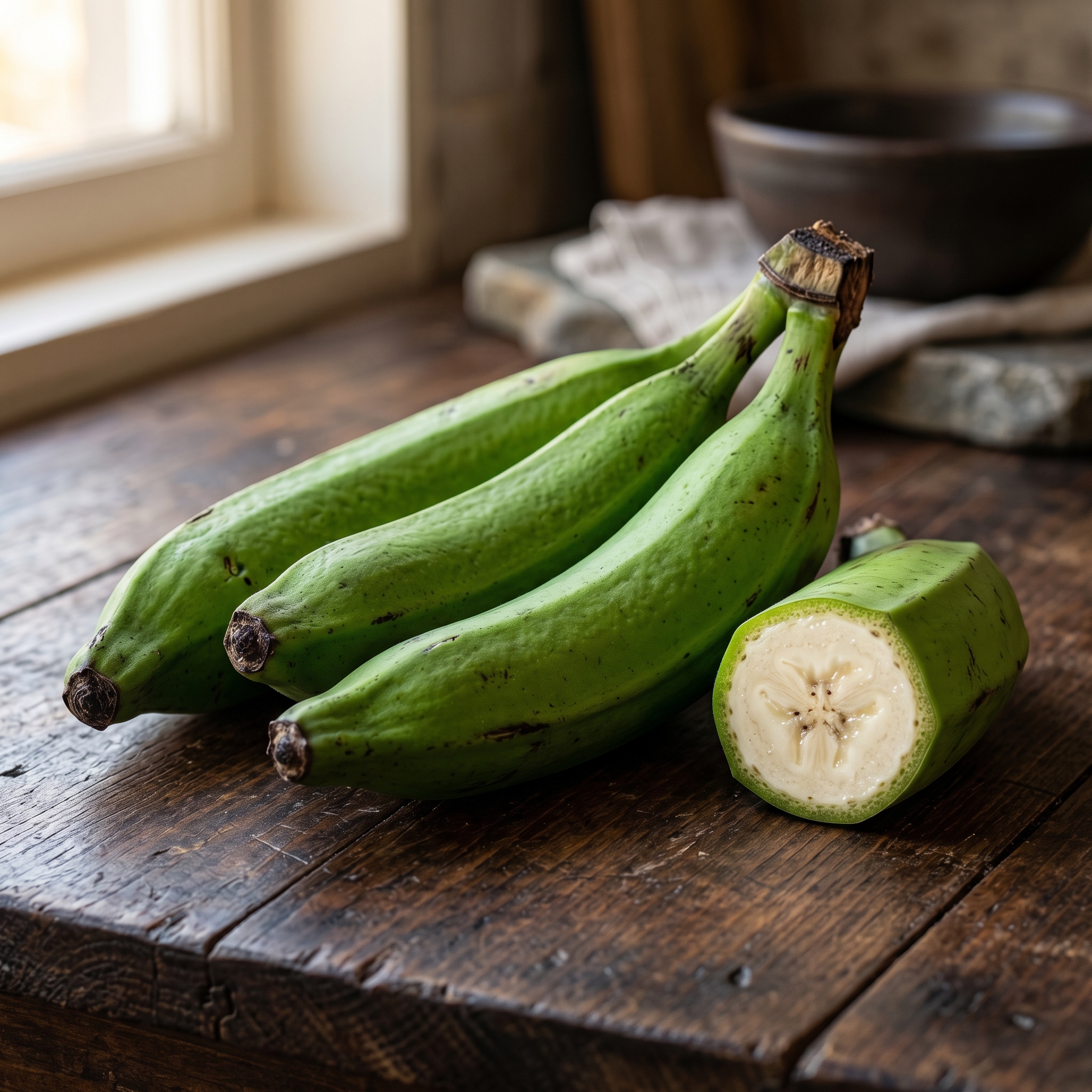
Unripe Plantain (Ogede Omini)
Ogede Omini (Yoruba) · Ogede Agbagba (Igbo) · Ayaba (Hausa)
The hard green plantain you have been ignoring. Glycaemic index of just 44 — compared to 66–90 for ripe plantain. Rich in resistant starch that your digestive enzymes cannot break down, meaning it passes through without spiking your blood glucose. Also has a "second meal effect" — eating it at breakfast reduces your spike at lunch.
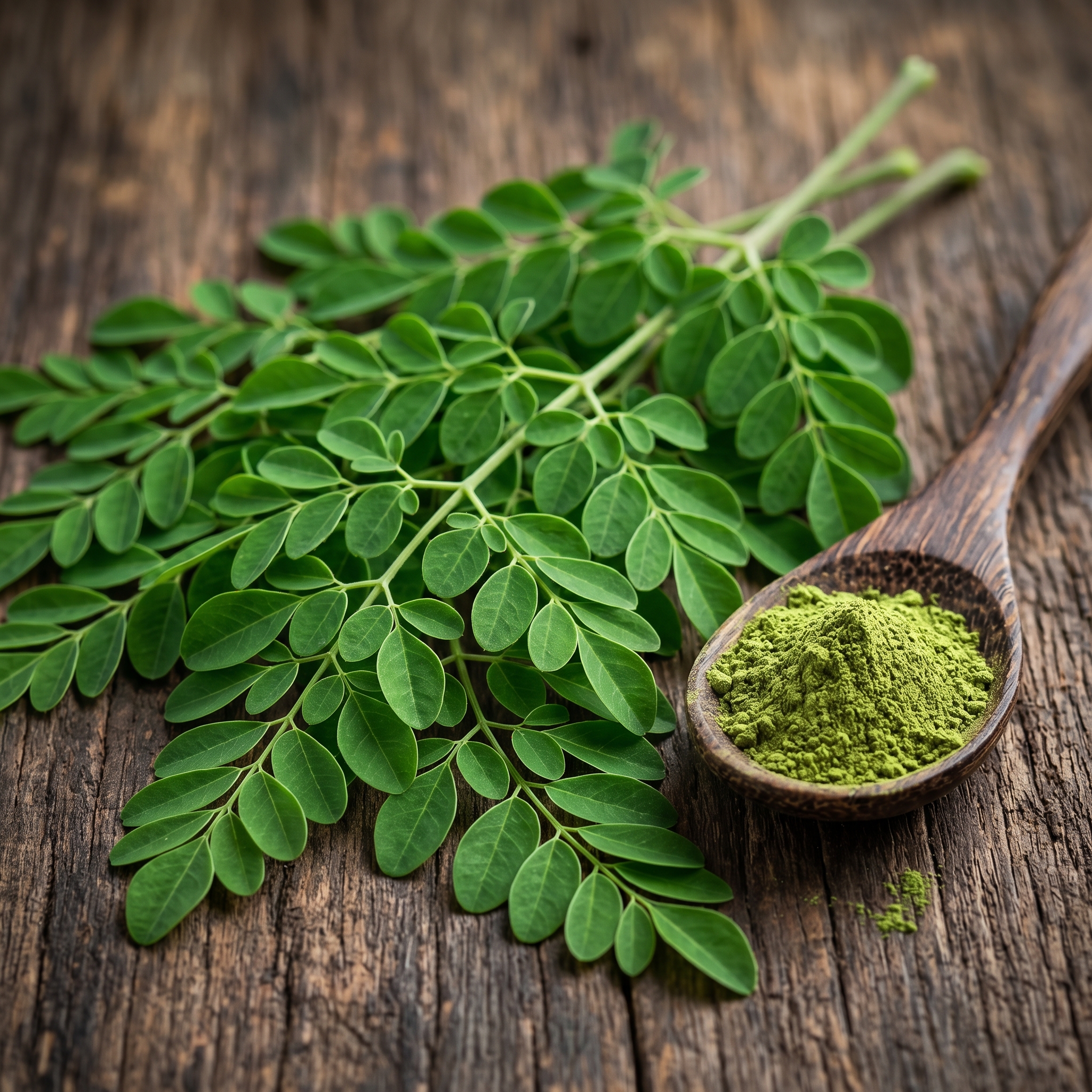
Moringa (Moringa oleifera)
Zogale (Hausa) · Ewe Igbale (Yoruba) · Okwe Oyibo (Igbo)
The small feathery leaf that Northern Nigerian grandmothers have cooked for generations. Contains chlorogenic acid which delays carbohydrate absorption, reducing post-meal spikes. A randomised controlled trial of 240 participants with Type 2 diabetes found fasting blood glucose dropped from 187.3 mg/dL to 132.6 mg/dL in just 30 days.
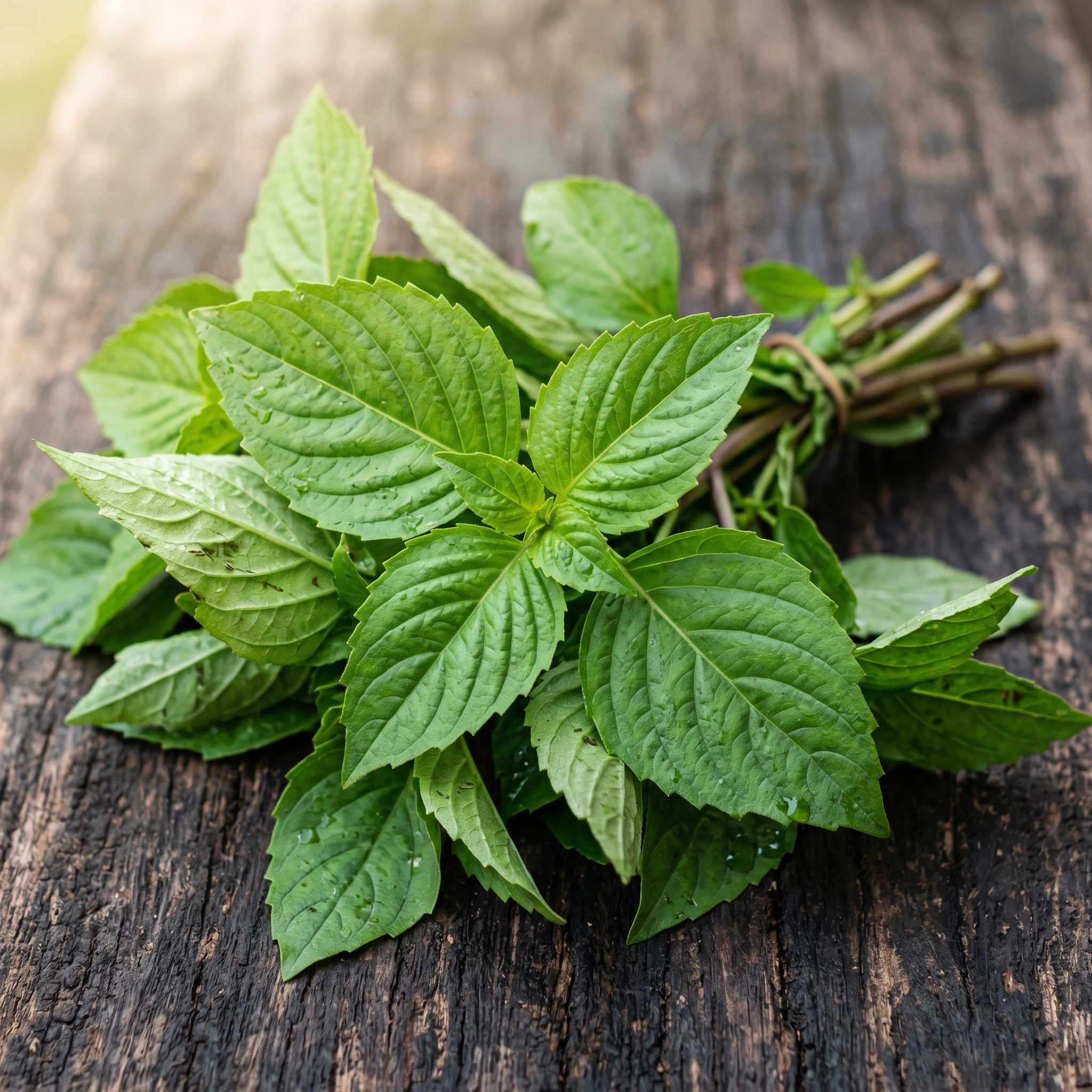
Scent Leaf (Ocimum gratissimum)
Nchanwu (Igbo) · Efirin (Yoruba) · Daidoya (Hausa)
The aromatic leaf in your pepper soup and nkwobi. Contains eugenol — which inhibits the same enzyme that one class of pharmaceutical diabetes drugs (acarbose) targets. Your grandmother's pepper soup was doing pharmacological work without knowing the name for it.
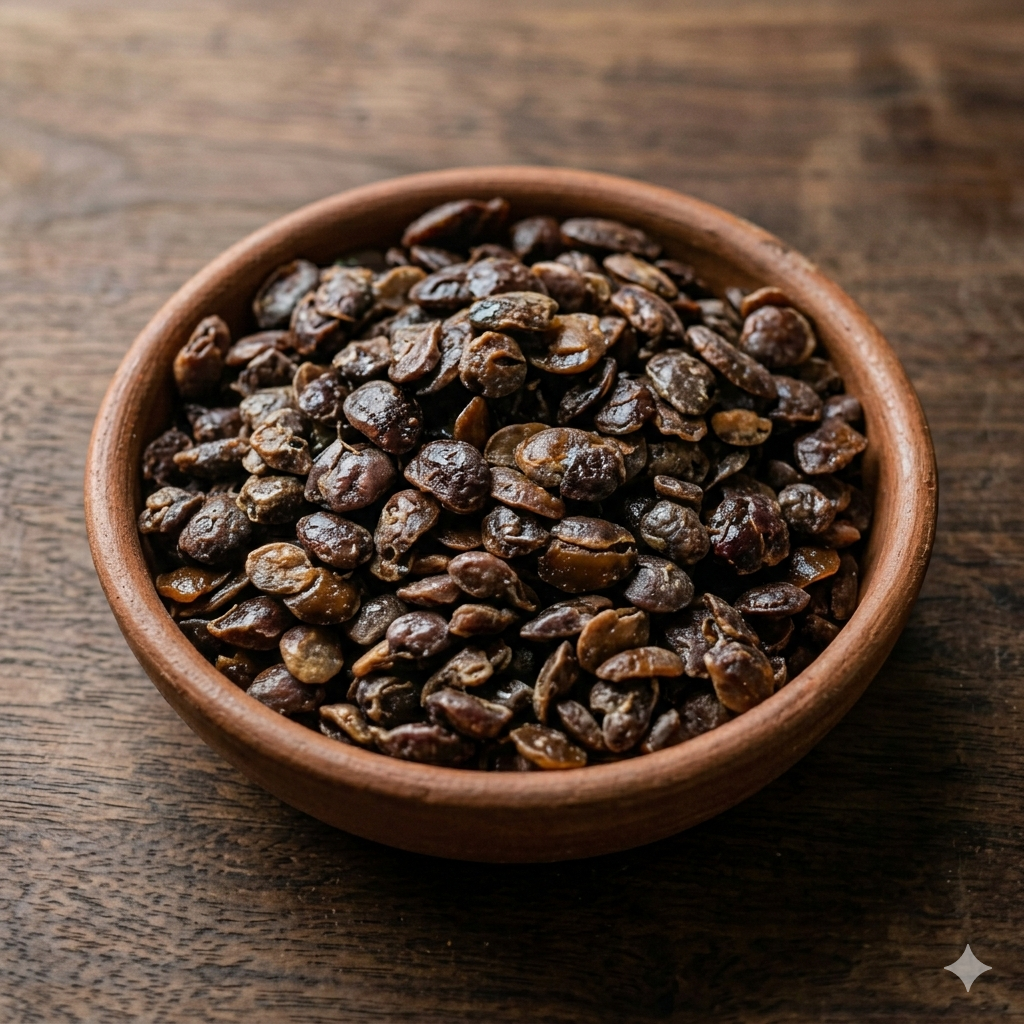
African Locust Bean (Iru/Dawadawa)
Iru (Yoruba) · Ogiri Igbo (Igbo) · Dawadawa (Hausa)
The fermented seasoning that makes your soup taste like your grandmother's. It is not just flavour — it is a probiotic food with documented metabolic benefits. The fermentation creates beneficial compounds that support gut health, which is directly linked to improved insulin sensitivity. Also rich in plant protein, which slows the glucose response from carbohydrates in the same meal.
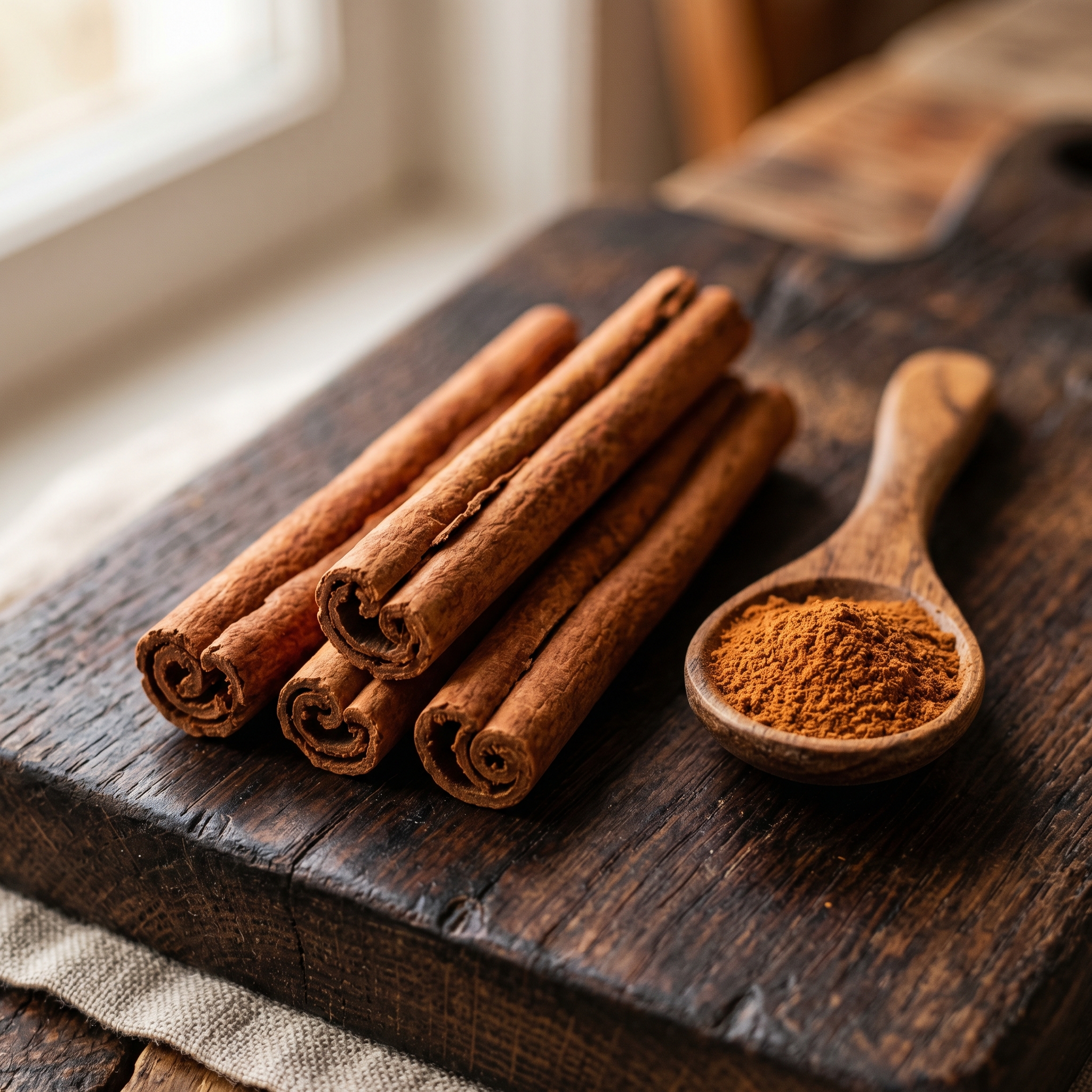
Cinnamon (Cinnamomum verum)
Oloorun (Yoruba) · Kirfa (Hausa)
The fragrant brown bark used in spice mixes across both Northern and Southern Nigerian cooking. Cinnamaldehyde — its active compound — promotes insulin release, enhances insulin sensitivity, inhibits gluconeogenesis (the process that makes your fasting numbers high), and delays gastric emptying. Few single ingredients work on as many mechanisms simultaneously.
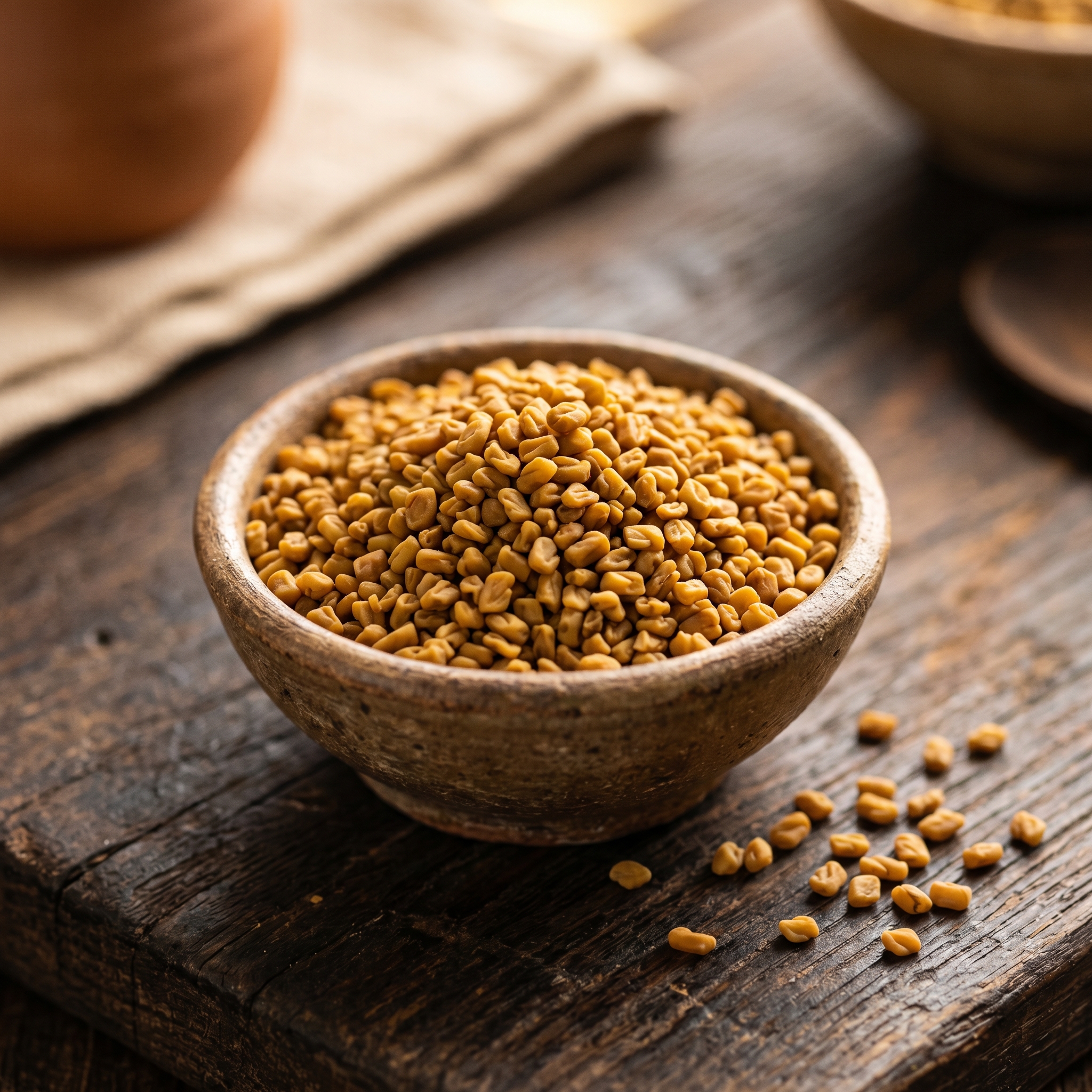
Fenugreek (Trigonella foenum-graecum)
Hulba (Hausa) · Eru Iyere (Yoruba)
Small golden-brown seeds with a slightly bitter, maple-like flavour. Its soluble fibre forms a thick gel in the digestive system that slows glucose absorption from carbohydrates. Also contains a unique amino acid (4-hydroxyisoleucine) that directly stimulates the pancreas to release insulin in response to glucose.
"My HbA1c was 8.1 when I started this protocol. Ninety days later it was 6.7. My doctor actually asked me what I had changed. I showed him the guide. He said keep doing it. That was the first time in four years a doctor told me I was moving in the right direction."
Everything You Are Getting — In One 90-Day System
This is not a pamphlet. This is a complete, structured 90-day protocol with every tool, tracker, recipe card, and reference guide built into one document.
- Chapter 1 — Why Your Numbers Are Not Moving The three specific biological root causes of your high blood sugar — the carbohydrate shift, the wrong oils, and a liver working against you overnight. The explanation your doctor never gave you. (Pages 5–7)
- The Morning Tonic — 4 Variations The core daily ritual. Three variations for different preferences plus a simplified travel version. Exact ingredients, preparation method, timings, and taste notes. Begin this on Day 1, before anything else changes. (Pages 7–8)
- Chapter 2 — The 7 Herbs Explained Every herb with its local Nigerian name, its specific mechanism, what the research actually says, how to use it, dosage, and exactly where to find it — in Nigeria, the UK, the US, Canada, and online. (Pages 9–17)
- Phase 1: Diagnose (Days 1–14) Your 14-day baseline protocol. A structured post-meal testing schedule across 14 common Nigerian meals. The Personal Trigger Food Log — your map of exactly which foods spike your blood sugar and which ones do not. (Pages 18–20)
- Phase 2: Control (Days 15–75) The full daily protocol: morning tonic, meal sequencing, herb integration, post-meal walking, bodyweight movement. The meal sequencing principle that reduces post-meal spikes by 20–40% without changing what you eat. The Phase 2 Daily Protocol Checklist. (Pages 21–24)
- Chapter 5 — The Nigerian Plate Restructured 40+ Nigerian foods rated across three categories: Eat Freely, Eat Smartly, Eat Carefully. The complete swallow guide, rice guide, protein guide, soup guide, drink guide — with specific strategies for every item. (Pages 25–27)
- The 8-Week Nigerian Meal Plan A complete 7-day sample menu for weeks 1–4 with specific breakfast, lunch, dinner, and snack options for every day — using Nigerian food throughout. How to attend events, naming ceremonies, and celebrations without destroying your numbers. (Pages 28–30)
- The 20-Minute Movement Protocol The exact post-meal walking protocol and bodyweight exercise routine. Why 10 minutes after a meal beats 60 minutes in the morning. The sleep protocol — explained as a blood sugar intervention, not a lifestyle recommendation. (Pages 31–33)
- Phase 3: Maintain (Days 76–90 and Beyond) How to maintain results permanently through celebrations, travel, and family events. The reduced Phase 3 testing schedule. The 90-Day Review questions. (Pages 34–36)
- The Doctor Visit Preparation System Exactly what data to bring to your appointment. The Question List that gives you the language to have the conversation that could reduce your medication. The herb-medication interaction guide. (Pages 37–38)
- The Complete Appendix — 10 Tools The 90-Day Blood Sugar Tracking Chart, all 4 Morning Tonic Recipe Cards, The 7-Herb Quick Reference, The Danger Foods Decoder (12 foods causing unexplained spikes), The Phase 2 Daily Checklist, The Nigerian Plate Rating Quick Reference, The Maintenance Eating Pattern Card, The Emergency Spike Response Protocol, The Doctor Visit Preparation Sheet, and The Complete 7-Day Sample Meal Plan Quick Reference. (Pages 1–22 of Appendix)
My brother sent me this guide after my last hospital visit. I was skeptical honestly. I have tried so many things. But I started the morning tonic and the meal sequencing thing and within two weeks I could see my fasting numbers dropping. By week six my doctor reduced my metformin dosage. Six years managing this thing and this is the first time any adjustment has gone downward. Get this guide.
Oga I go straight to the point. Week 1 fasting average was 9.6. Week 8 fasting average is 6.9. I have not stopped eating eba. I have not started going to gym. I added the bitter leaf soup, changed the order I eat my food, and drink that morning tonic every day. The difference is real. My wife calls it my "grandfather's medicine". She is not wrong.
Here Is Everything You Are Getting
One system. Three tools. Everything a Nigerian man needs to take control of his blood sugar in 90 days.
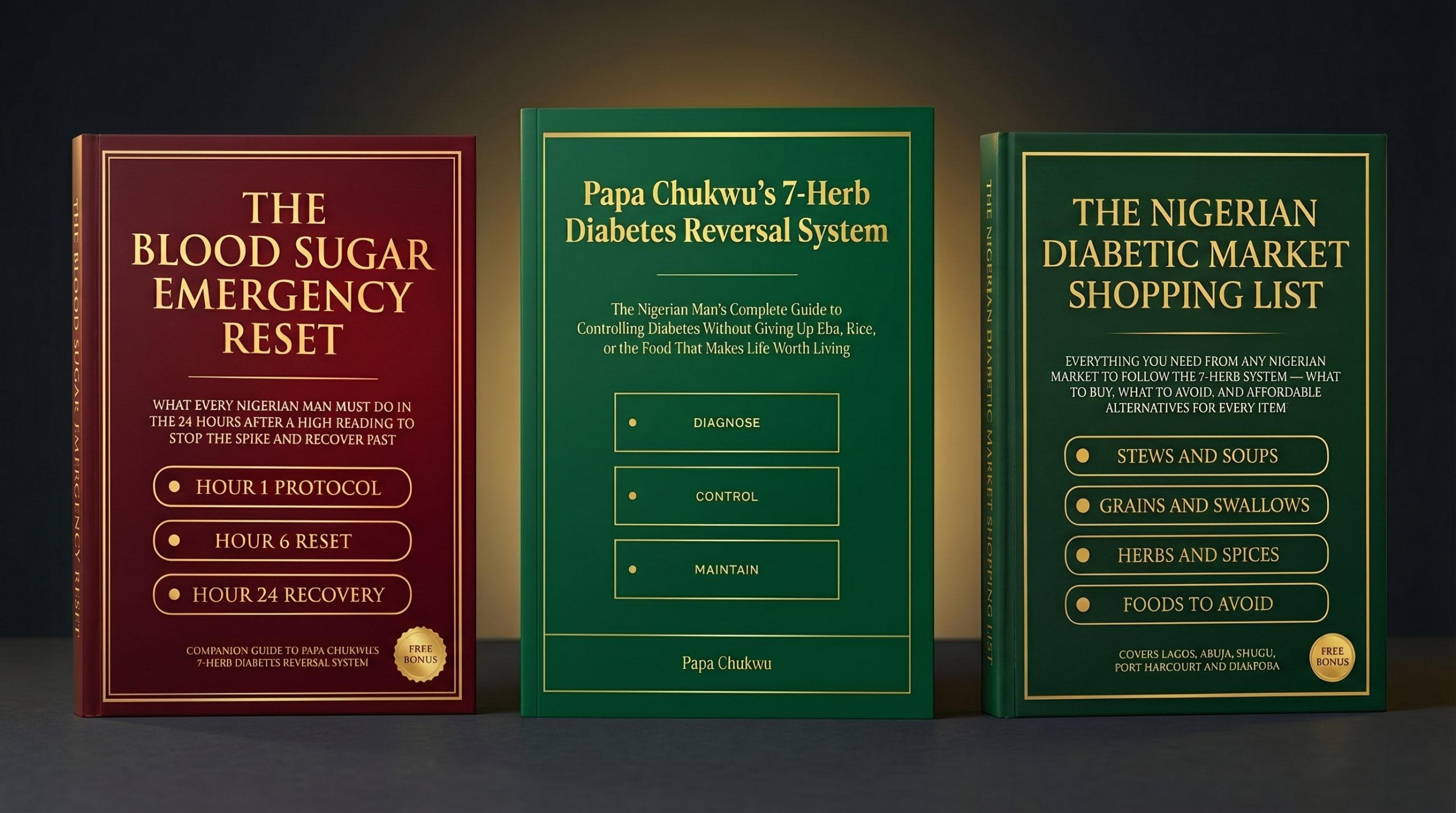
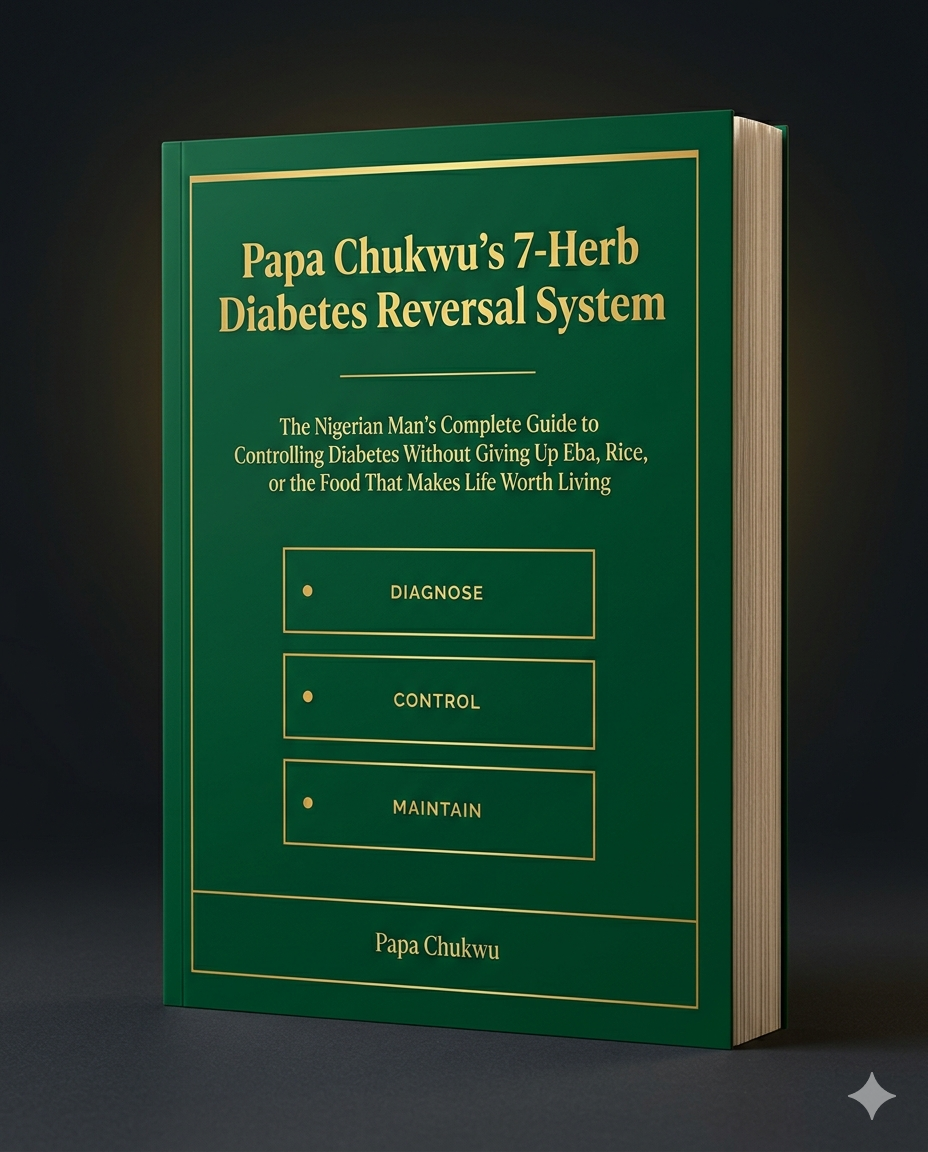
Papa Chukwu's 7-Herb Diabetes Reversal System
The complete 90-day protocol. 10 chapters. 43-page guide plus a 22-page appendix packed with tools, trackers, and reference cards. Everything built for Nigerian food, Nigerian life, and Nigerian men.
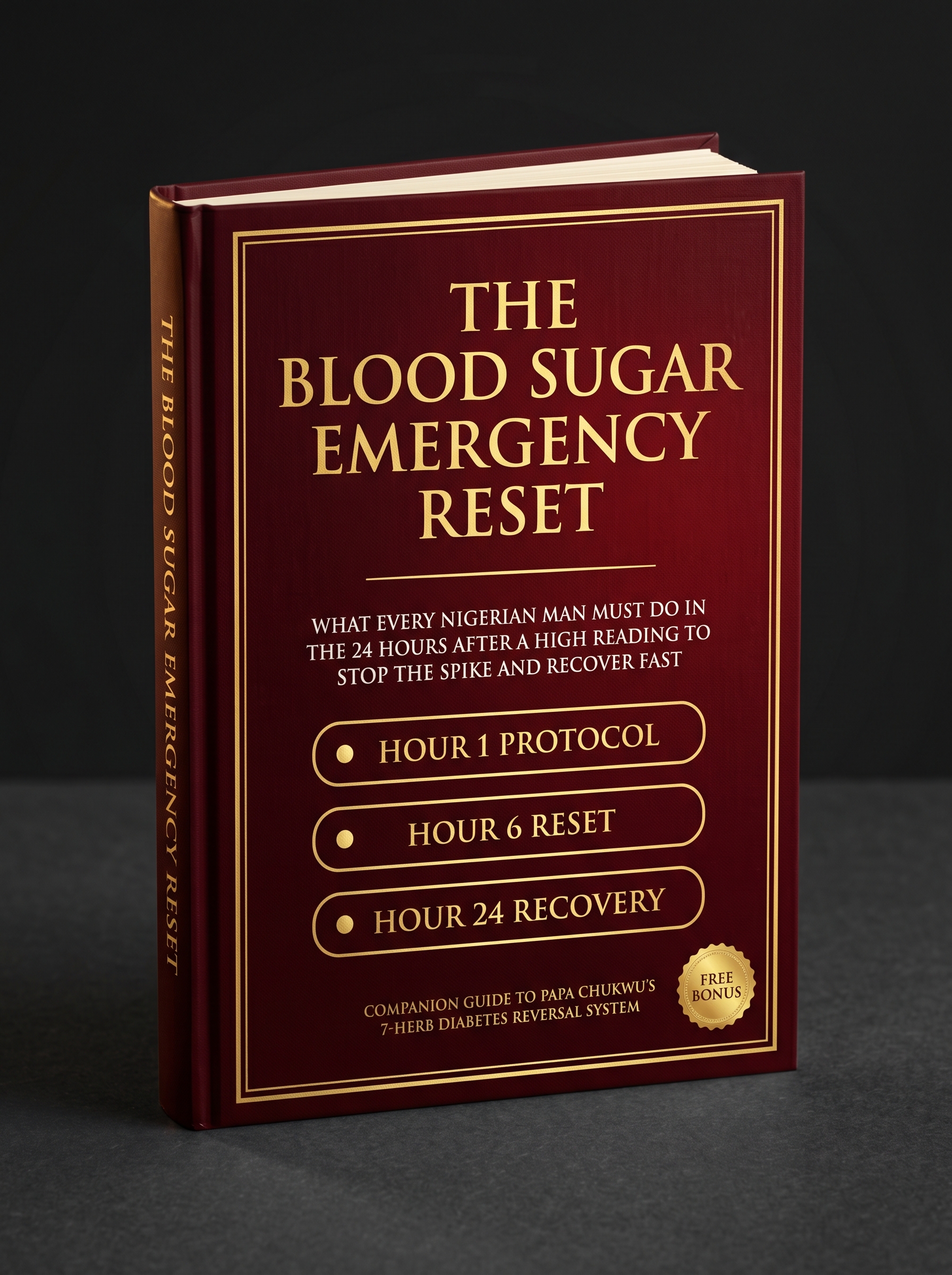 Free Bonus #1
The Blood Sugar Emergency Reset
What to do in the 24 hours after a dangerously high reading. The Hour 1 Protocol, the Hour 6 Reset, and the Hour 24 Recovery — your emergency plan for the mornings when the number frightens you.
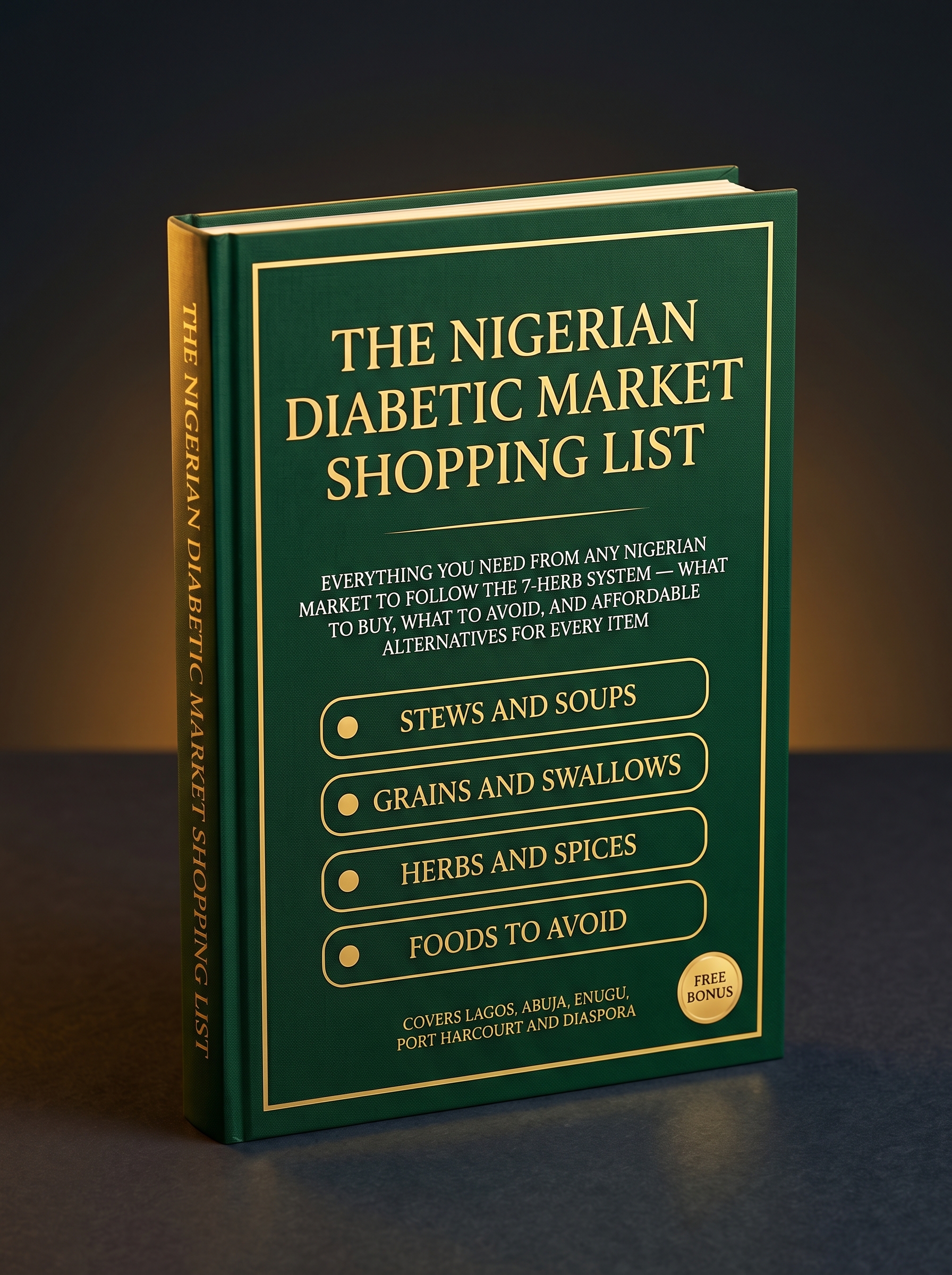 Free Bonus #2
The Nigerian Diabetic Market Shopping List
Every herb, every food, every item — categorised by Stews & Soups, Grains & Swallows, Herbs & Spices, and Foods to Avoid. Covers Lagos, Abuja, Enugu, Port Harcourt, and the Diaspora. Take it to the market on Day 1.
What You Get — And What It Costs
Pay the Way That Works for You
All payments are processed securely through Selar — Nigeria's most trusted digital product platform. Your download is available immediately after payment.
Checkout is encrypted and secure. Your download link is sent immediately upon payment confirmation.
The 90-Day Risk-Free Guarantee

Follow the Protocol. See the Results. Or Pay Nothing.
I am so confident this system works that I am putting my money where my mouth is. Follow the 90-day protocol exactly as it is written. If you do not see a meaningful improvement in your fasting blood glucose numbers by Day 90, contact us and you will receive a full refund — no questions, no argument, no delay.
What Happened After 90 Days
What Does Your Life Look Like If Nothing Changes?
Without This System
- The same number staring back at you every morning
- The same medication, possibly at higher doses
- More restrictions at every family table
- The fear of what the complications will look like in ten years
- Watching your grandchildren grow up as a sick man
In 90 Days With This System
- Fasting numbers trending downward, week by week
- A conversation with your doctor about reducing medication
- Eating ofe onugbu at your family table without guilt
- Understanding exactly why your numbers move — and how to control them
- A system you can pass on to your brothers and sons
The knowledge in this guide does not expire. The herbs do not stop working. The meal sequencing principle is yours permanently. One morning tonic, one post-meal walk, one bowl of bitter leaf soup — started today — is Day 1 of a completely different trajectory.
P.S. — If you are reading this postscript, you already know this system is for you. Remember — this price of ₦9,800 is for the first 50 buyers only. Once that limit is reached, the price returns to ₦18,000. And remember this: if you follow the 90-day protocol and do not see meaningful improvement in your blood sugar numbers, you get every naira back. You are not risking anything except 90 days of doing what your grandfather would have told you to do anyway.
P.P.S. — Your doctor is not your enemy. But they were trained to manage diabetes with medication — not to reverse it with Nigerian herbs. That does not mean the herbs do not work. It means you have to bring the knowledge to the table yourself. This guide is how you do that.